 Tarmac
"I walked out that morning and just stood there. My driveway looked like it belonged to a different house — smooth, dark, and perfectly flat. Ran my hand across it and it was still warm. That's when I knew these guys were the real thing."
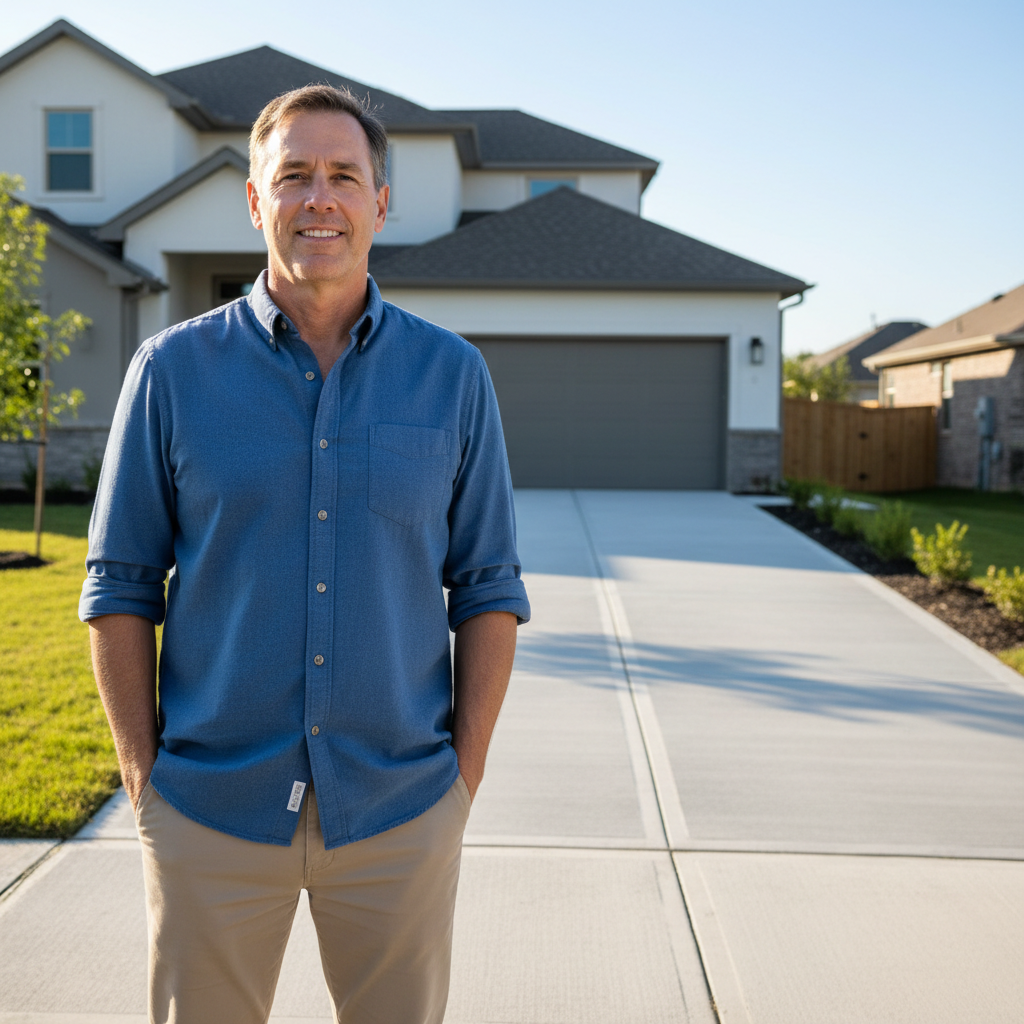
Gary Hutchins
Homeowner · Chisum Road, Paris TX
Get Your Free Estimate
We'll satellite-view your property before we call — so the first conversation is about your driveway, not a generic price range.

Alligator cracking isn't a surface problem. It's a foundation problem.
"By the time you see the pattern, the base has been failing for two seasons. A seal coat on top is just lipstick."
That distinctive cracked pattern — the one that looks like reptile skin across your driveway — has a name for a reason. It forms when the asphalt layer above loses its support. The base underneath has shifted, saturated, or compacted unevenly, and the surface above is flexing under every load until it fractures.
In Lamar County, the clay-heavy soil expands in wet winters and contracts in dry summers. Driveways installed without proper subgrade preparation — adequate depth, correct compaction, appropriate base material — start showing alligator cracks within three to five years. We see it constantly.
Patching over it buys a season. Fixing it means addressing what's underneath. That's the conversation we have on every estimate — not just what it costs to resurface, but whether resurfacing is even the right call.

The top coat gets the compliments. The base coat earns the longevity.
"I can lay the most beautiful two-inch surface you've ever seen. If the base isn't right, it's gone in four years. That's the honest truth."
Every customer wants to talk about the finish. The color, the edge detail, the stripe lines. We care about all of that. But the work that determines whether a driveway is still flat and solid in fifteen years happens before we lay a single inch of asphalt.
Base preparation means excavating to the correct depth — typically six to eight inches for residential driveways in this region — grading for proper drainage slope, compacting the subgrade, and installing a crushed stone base layer that's been compacted in lifts. Each step matters. Skip or rush any of them and you're building on a surface that will move.
We run a plate compactor over the base until density tests confirm we've hit the numbers. Then we check grade one more time before the first load rolls off the truck. That's the part of the job nobody photographs, but it's the part that matters.

Water is the enemy. Drainage grade is the only thing standing between a new driveway and a ruined one.
"We're paving on clay. Clay and water are a bad combination. Get the grade wrong by half an inch and you've built a pond that sits under your asphalt every time it rains."
Greater Paris sits on Blackland Prairie soil — high-plasticity clay that swells when wet and shrinks when dry. That seasonal movement is manageable if you account for it. It's catastrophic if you don't.
Every driveway we install is graded to shed water away from the structure and toward an intended drainage path. We're not talking about dramatic slopes — a two percent cross-grade is barely perceptible to the eye but makes an enormous difference in how water behaves. We confirm it with a level before the crew breaks for lunch.
Property managers and business owners get the same conversation. A parking lot that pools water in three spots isn't just an inconvenience — it's accelerating the deterioration of the entire surface. We design drainage into the project from the first site visit, not as an afterthought.
Get Your Free Estimate
We'll satellite-view your property before we call — so the first conversation is about your driveway, not a generic price range.
Download Our Free
Paving & Asphalt Guide
12 pages on what makes a driveway last 20 years in North Texas — and what causes most to fail in five. No sales pitch. Just the information.
We'll send it once. No drip campaigns. Unsubscribe anytime.